
When it comes to security needs and maintaining order in controlled environments, making the right choice in surveillance systems is important for the best security practices to be performed and the best work done. Analog CCTV and Digital Internet Protocol Camera systems both serve as alternatives to each other, yet one is significantly superior to the other. Knowing what systems work best for the needs of the client and what the client values in cost is what needs to be decided for the best practice to be performed.
How Do Security Features Differ Between IP and Analog CCTV?
Image Quality and Resolution
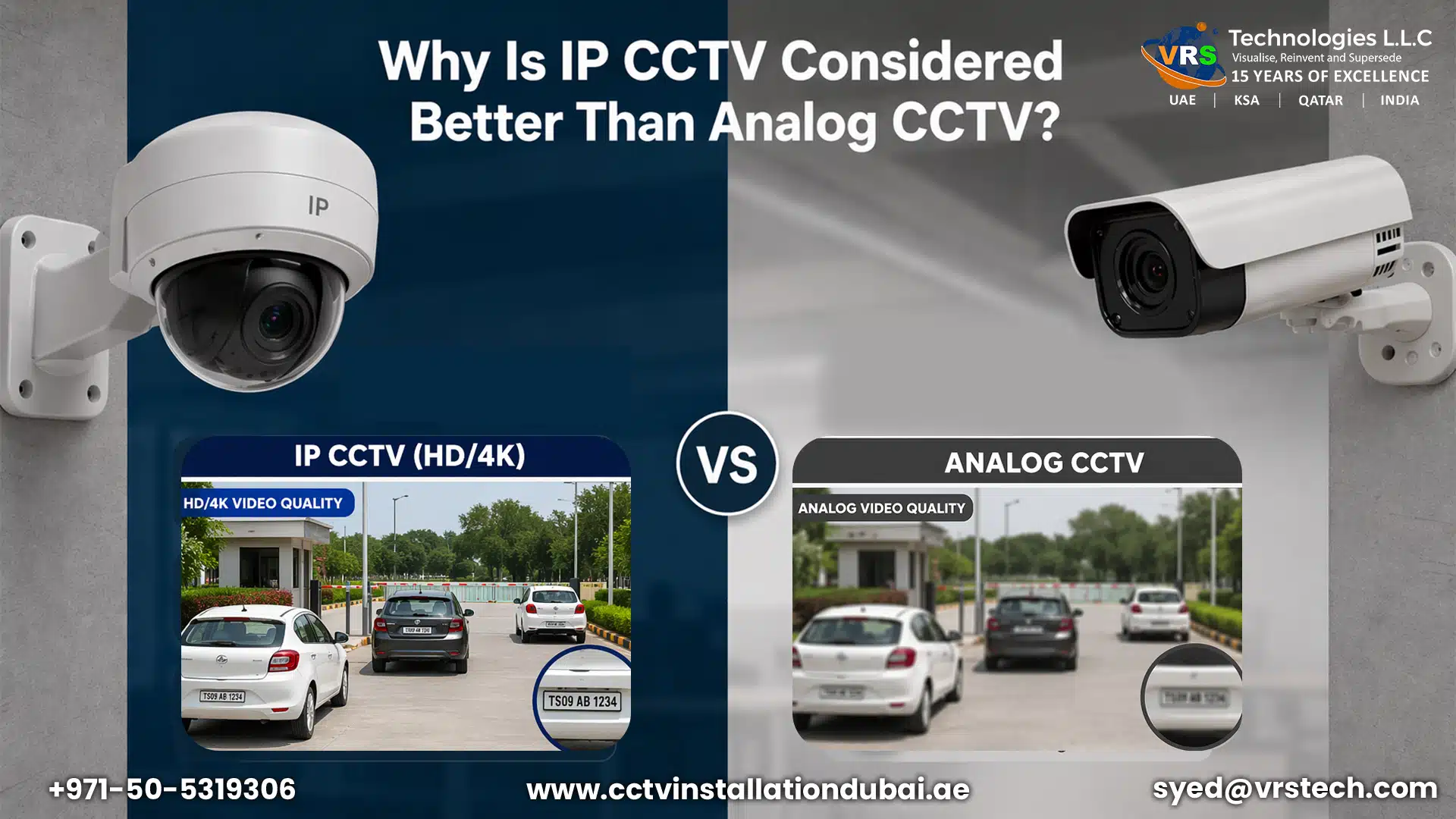
The most important values in choosing an Analog and Digital Internet Protocol Camera system are the detail that is captured in the image. Analog systems typically have significantly lower resolutions, and it is nearly impossible to capture and identify faces within the video. In contrast, Digital Internet Protocol Cameras of the systems produce a significantly higher quality image with higher resolutions. As a result of the image being with a higher quality resolution, it is easier to capture the smaller details that could also serve as reliable pieces of evidence to a case.
Remote Access and Flexibility
Having an Internet Protocol Camera system installed is also significantly more convenient. Digital system users have the ability to access and view live streams and recordings of the video wirelessly and remotely through most devices. On the other hand, Analog systems require the user to view recordings that have to be connected with wires and physically be there in the presence of the system.
Scalability and Integration
Scalability is another primary benefit of IP CCTV. Adding more cameras to existing IP systems is easier because there is less direct wiring, having more of a focus on network connectivity. IP cameras are also able to be integrated with other systems such as alarms and access control for a more complete security solution. With analog systems, there are more constraints and expansion requires a lot of rewiring.
Advanced Features
There are a variety of different functions that IP cameras are capable of that are not performable by analog cameras. Common functions in IP CCTV systems that help mitigate and aid security are video analytics, motion sensing, and automatic alert systems with facial identification. This helps to make the system more preemptive and helps to avoid incidents before they turn into something worse.
Cost Considerations
The investment in IP CCTV systems is financially more difficult than analog systems. Avoiding a video surveillance system is also not a great alternative as IP systems offer video features that are of higher quality, enhanced remote access, easier expansion, and more sophisticated options. Over time, IP systems are simply more efficient because maintenance and system updating is less complicated.
Conclusion
Choosing between IP and analog CCTV depends on your security requirements, budget, and future plans. However, the advantages of IP CCTV—superior image quality, remote access, scalability, integration, and advanced features—make it the preferred choice for modern surveillance needs. For businesses and homeowners looking for a reliable and future-proof security solution, IP CCTV offers unmatched value and performance.
Choosing IP security cameras in Dubai from VRS Technologies LLC ensures high-quality surveillance, remote monitoring, and advanced security features for your home or business.
For more information, visit www.cctvinstallationdubai.ae or call us at +971-4-3866012 to book your system today. Protect your property effectively and stay connected with VRS Technologies.